


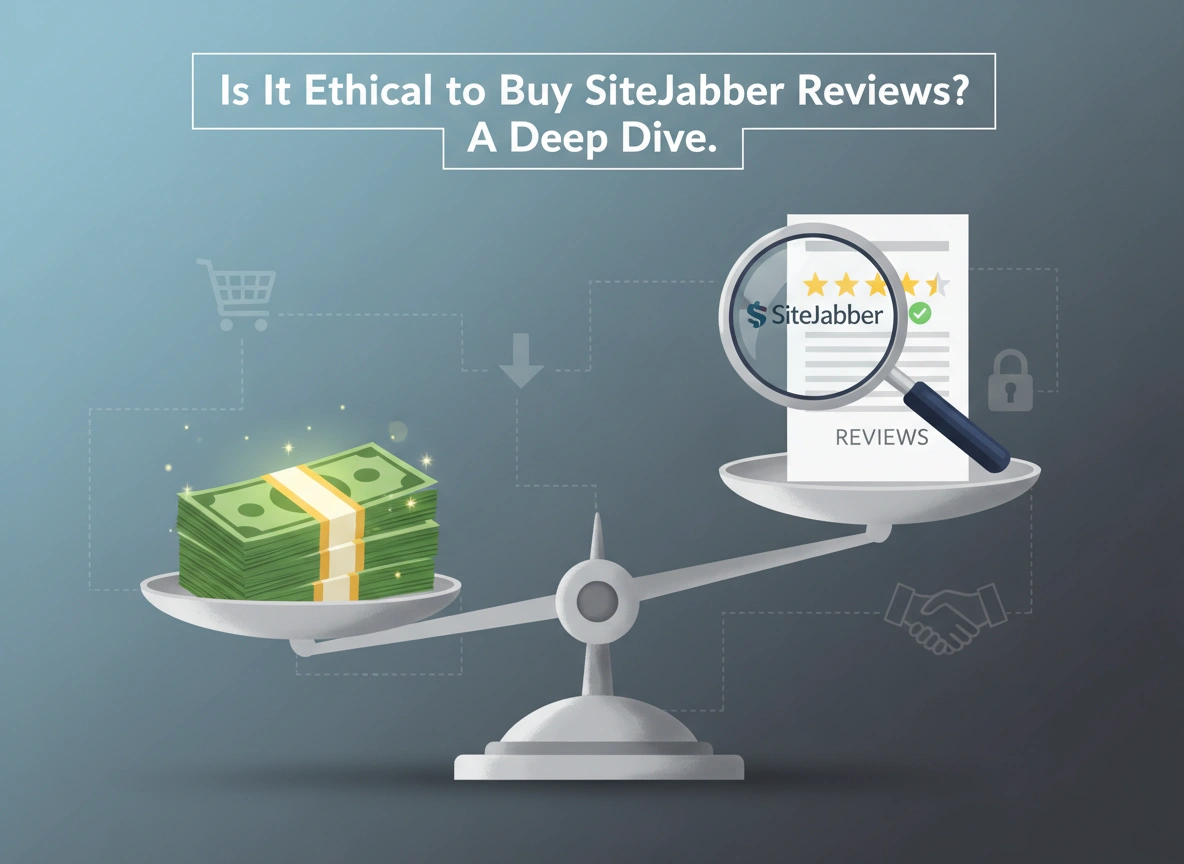
Trust is the currency of the digital marketplace. When a potential customer lands on your website or searches for your services, they often look for social proof before committing their hard-earned money. Platforms like SiteJabber have emerged as critical pillars in this decision-making process, offering consumers a window into the experiences of others. However, the intense pressure to display a pristine five-star rating has led some businesses to consider a controversial shortcut: purchasing reviews.
This practice raises significant questions that go beyond simple marketing tactics. Is buying reviews merely a way to level the playing field, or is it a fundamental breach of trust? This article examines the ethical landscape of purchasing SiteJabber reviews, analyzing the implications for businesses, the potential harm to consumers, and the long-term viability of manufactured reputations.
Key Takeaways
Contents
- The Ethical Breach: Understanding why buying reviews violates the core promise of consumer transparency.
- The Business Risk: Examining the severe consequences, from platform bans to legal action.
- Consumer Impact: How fake reviews distort market value and erode general trust in online commerce.
- Sustainable Alternatives: Proven strategies for building a genuine reputation without cutting corners.
The Mechanics of the Review Economy
Before diving into the ethics, we must understand why the “review economy” exists. Online reviews have replaced word-of-mouth recommendations for millions of consumers. A study by BrightLocal found that nearly half of all consumers trust online reviews as much as personal recommendations from friends and family. This immense power creates a high-stakes environment where a single negative review can feel like a disaster for a small business.
The SiteJabber Ecosystem
SiteJabber positions itself as a consumer protection service. It allows users to review businesses to help others avoid scams and find reliable companies. Because SiteJabber often ranks highly in search engine results for queries like “[Company Name] reviews,” the platform holds significant sway over a brand’s online reputation. This visibility is exactly what makes the temptation to manipulate the system so strong.
How Reviews Are Bought
The market for fake reviews is vast and often operates in the shadows. Vendors on freelance marketplaces or specialized “reputation management” agencies promise to deliver positive feedback for a fee. These services often claim their reviews are “safe” or “undetectable,” using accounts that appear aged or legitimate. The transaction is simple: money is exchanged for a specific sentiment, regardless of actual customer experience.
The Ethical Arguments: Is It Ever Justified?
The core question of ethics usually revolves around honesty and harm. Proponents of buying reviews—or at least those who justify it privately—often argue from a position of defense.
The “Level Playing Field” Fallacy
A common justification among business owners is the belief that “everyone else is doing it.” If competitors are inflating their scores with purchased praise, an honest business might feel it is fighting a losing battle. From this perspective, buying reviews is seen not as deception, but as a necessary survival tactic to counterbalance unfair competition.
However, this argument collapses under ethical scrutiny. Two wrongs do not make a right. Participating in deception because others are doing so only accelerates the degradation of the entire marketplace. It creates a “race to the bottom” where truth becomes irrelevant, and the consumer is the ultimate victim.
The Problem of Deception
At its heart, buying a review is a lie. It presents a transaction as a genuine experience. When a business purchases a review on SiteJabber, they are fabricating a narrative. They are telling potential customers, “This person trusted us and was satisfied,” when no such person exists or no such transaction occurred.
This deception violates the implicit contract between a business and the public. Consumers assume that reviews represent real interactions. By breaking this trust, a business engages in false advertising. From a deontological ethical perspective—which focuses on moral duties and rules—lying to consumers is inherently wrong, regardless of the outcome.
Distorting the Market
Ethical commerce relies on the free flow of accurate information. When reviews are bought, the market signal is distorted. Superior products may be overlooked in favor of inferior ones that have bigger marketing budgets for fake reviews. This punishes innovation and quality service. If a mediocre company can buy a five-star reputation, they have no incentive to actually improve their service or product. This stagnation harms the industry as a whole.
The Consequences: Risking It All for Stars
Beyond abstract ethical theories, there are tangible, often devastating consequences for businesses that choose to buy SiteJabber reviews. The short-term gain of a higher star rating is rarely worth the long-term risks.
Platform Retaliation and Terms of Service
SiteJabber, like Google and Yelp, has sophisticated algorithms designed to detect fraudulent activity. They look for patterns such as IP address clusters, review timing, and linguistic similarities.
When a business is caught:
- Consumer Alerts: SiteJabber may place a prominent “Consumer Alert” banner on the business profile, explicitly warning users that the company has been caught manipulating reviews. This is a digital scarlet letter that is far more damaging than a low rating.
- Account Suspension: The platform may ban the business entirely, removing their ability to respond to legitimate complaints.
- Review Purges: Thousands of reviews can be wiped overnight, leaving the business with a ruined score.
Legal and Regulatory Penalties
Governments worldwide are cracking down on fake reviews. The Federal Trade Commission (FTC) in the United States has explicitly stated that undisclosed paid endorsements are illegal. In 2023, the FTC proposed a new rule that would specifically ban the buying and selling of fake reviews, carrying penalties of up to $50,000 per violation.
Similarly, the Competition and Markets Authority (CMA) in the UK has launched investigations into fake reviews. Businesses are no longer just risking a slap on the wrist; they are risking significant financial fines and legal action for deceptive trade practices.
The Erosion of Brand Integrity
Perhaps the most difficult consequence to quantify, but the hardest to recover from, is the loss of integrity. In the digital age, authenticity is a primary driver of customer loyalty. If customers discover that a brand has been faking its reputation, the backlash is severe. Social media amplifies these scandals. A brand that buys trust eventually proves it deserves none.
The Impact on Consumers
The primary victims of purchased reviews are the consumers. They rely on platforms like SiteJabber to make informed decisions about where to spend their money, often on significant purchases like electronics, travel, or fashion.
Financial Loss and Frustration
When a consumer buys a product based on fake praise, and that product fails to meet expectations, the consumer suffers financial loss. They may also face the frustration of dealing with poor customer support from a company that only pretended to care about service.
The “Boy Who Cried Wolf” Effect
Widespread review manipulation leads to cynicism. As consumers become more aware of fake reviews, they start to distrust all reviews—even the legitimate ones. This skepticism makes it harder for honest consumers to share their genuine experiences and be heard. It forces buyers to spend more time vetting companies, adding friction to the buying process.
Ethical Alternatives: Building a Genuine Reputation
If buying reviews is unethical and risky, how should businesses improve their SiteJabber presence? The ethical path requires patience and a focus on actual customer satisfaction.
1. Ask for Reviews Correctly
There is nothing unethical about asking a happy customer to leave a review. In fact, most satisfied customers are willing to share their experience but simply forget to do so.
- Timing is key: Ask when the customer is happiest, such as immediately after a successful delivery or support resolution.
- Make it easy: Provide direct links to your SiteJabber profile in follow-up emails.
2. Respond to Negative Feedback
A profile with a mix of positive and negative reviews often looks more trustworthy than a perfect 5.0 score. How a business handles criticism says more about them than the criticism itself.
- Apologize and rectify: legitimate complaints should be addressed publicly and professionally.
- Show you care: This demonstrates to future customers that if something goes wrong, you will be there to fix it.
3. Incentivize Without Buying
You can incentivize the act of reviewing, provided you do not incentivize the content or sentiment of the review. However, this is a gray area. FTC guidelines require that any incentive (like a discount or entry into a contest) must be disclosed by the reviewer. The safest route is to avoid incentives entirely and rely on goodwill.
4. Improve the Core Service
The most sustainable way to get better reviews is to be a better business. Analyze the negative feedback you receive on SiteJabber. Is there a recurring issue with shipping times? Is customer support slow? Fixing these root causes will naturally lead to better organic reviews over time.
Conclusion
The question “Is it ethical to buy SiteJabber reviews?” invites a clear answer: No. It is a deceptive practice that misleads consumers, distorts market competition, and violates the trust required for a healthy digital economy.
While the pressure to compete in a ratings-obsessed world is real, the solution cannot be fabrication. Buying reviews is a fragile strategy built on a foundation of lies. It risks severe penalties from platforms and regulators, and it alienates the very customers businesses are trying to attract.
True reputation management is not about manipulation; it is about reflection. It involves showcasing the genuine experiences of real customers and using feedback—both good and bad—to evolve. In the end, a business built on integrity will always outlast one built on purchased stars.




Leave a Reply