 Skip to content


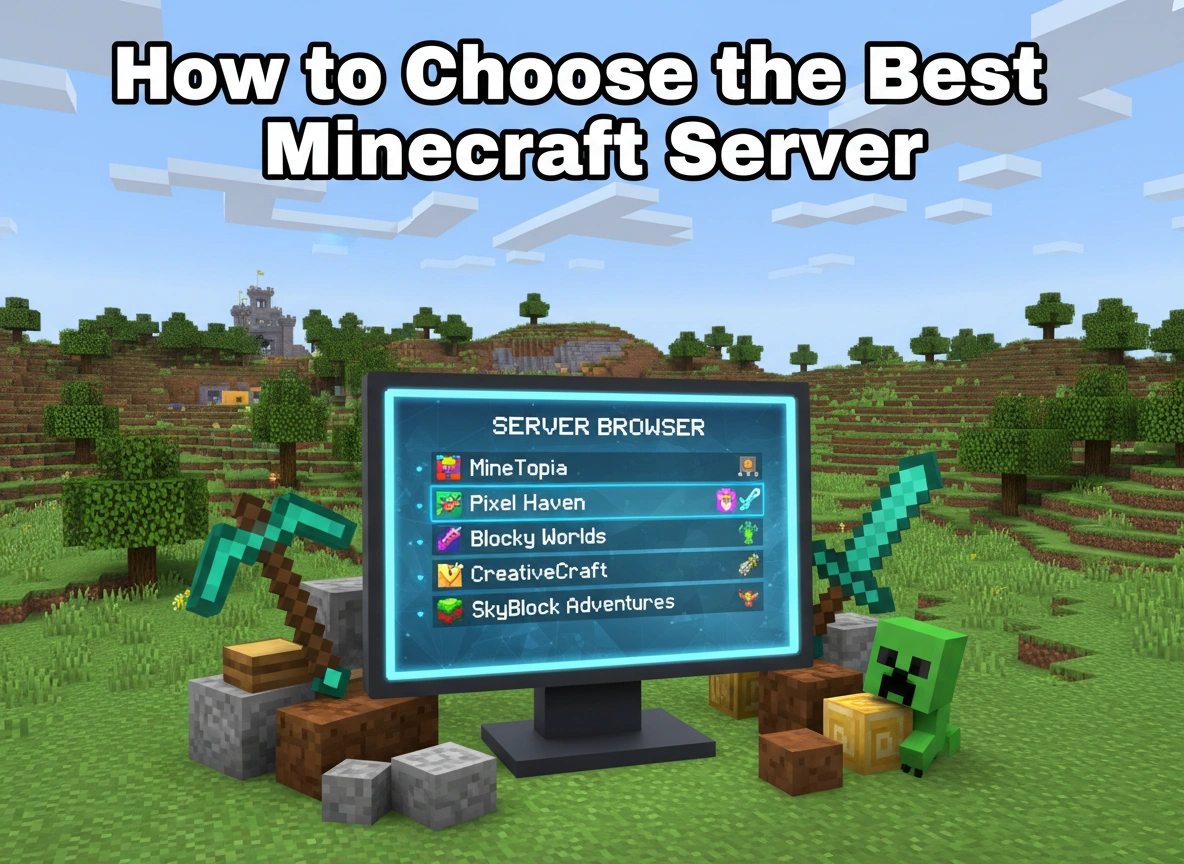
Minecraft is much more than breaking and placing blocks. While playing solo provides a relaxing sandbox experience, joining a multiplayer server unlocks a massive universe of custom games, massive collaborative builds, and thriving communities. However, finding the right server often feels overwhelming.
Thousands of active servers exist, ranging from massive networks with thousands of concurrent players to small, private worlds for close friends. A great server provides a seamless, lag-free environment where you can safely invest hundreds of hours. A poorly managed one can easily ruin your experience through toxic behavior, unstable performance, or unfair advantages.
This guide will help you confidently navigate Minecraft server lists to find your perfect match. You will learn how these lists work, discover the critical factors to evaluate, and understand how to align a server’s features with your personal playstyle.
Understanding Minecraft Servers and Their Importance
Contents
A Minecraft server is a player-hosted or business-hosted platform that allows multiple people to play the game together in the same world. These servers act as the backbone of the multiplayer community. They dictate the rules of the game, the active modifications, and the overall culture of the player base.
Choosing the right server is important because it directly impacts your enjoyment of the game. When you join a server, you invest your time into building bases, gathering resources, and making connections with other players. If the server shuts down abruptly or suffers from poor management, you lose all of that hard work.
Furthermore, servers offer experiences that simply do not exist in the base game. Through custom coding and community management, server owners create complex economies, competitive roleplaying factions, and unique mini-games. Finding a well-managed server ensures you get to enjoy these features in a stable, welcoming environment.
Decoding Minecraft Server Lists
Minecraft server lists are online directories that categorize and rank thousands of active servers. These websites act as search engines specifically built for the multiplayer community. They help players filter options based on game version, country, and specific game modes.
Most server lists rank networks based on player votes. Servers encourage their active players to vote daily on these websites, usually offering in-game rewards in exchange. While a high rank indicates a large and active community, it does not always guarantee the best experience for every individual player.
When browsing a server list, you will notice banners, tags, and short descriptions for each entry. The tags are particularly helpful, as they highlight the core game modes, such as “Survival,” “Skyblock,” or “Prison.” Pay attention to the live player count and uptime percentage displayed on the list, as these metrics provide a quick snapshot of a server’s health and popularity.
Key Factors When Selecting a Server
Finding the perfect server requires looking past the flashy banners. You need to evaluate several core components that make up the day-to-day player experience. Keep these key factors in mind as you browse through the directories.
Server Type and Game Modes
The most crucial factor is the game mode. Minecraft servers specialize in different styles of play. “Survival” servers offer a classic experience with economy plugins, while “Factions” focus on base-building, raiding, and competitive player-versus-player (PvP) combat.
If you prefer building without resource constraints, look for “Creative” servers. Alternatively, “Minigame” networks host quick, arcade-style games like BedWars or Hunger Games. Identify what you actually want to do in the game before committing to a specific server type.
Community Size and Culture
Community size drastically changes the feel of the game. Massive networks host thousands of players, guaranteeing that you will always find full minigame lobbies and bustling virtual economies. However, you might feel like just another face in the crowd.
Smaller servers, hosting between twenty and fifty players, offer a tight-knit community feel. You can easily get to know the regular players and the administration team. Consider whether you want the bustling energy of a virtual city or the quiet collaboration of a small town.
Rules and Moderation
Every server enforces a unique set of rules. Some servers operate as complete anarchies where griefing, stealing, and cheating are perfectly acceptable. Others maintain strict family-friendly environments with heavy chat filters and zero tolerance for property destruction.
Active moderation is essential for enforcing these rules. Look for servers that clearly outline their guidelines on their website or Discord channel. A strong team of moderators will keep the chat clean, prevent cheating, and quickly resolve player disputes.
Performance and Uptime
Nothing ruins a gaming session faster than crippling lag or frequent disconnects. Server performance relies heavily on the hardware hosting it and the physical location of the server. Choose a server hosted in or near your geographic region to ensure a low ping and smooth gameplay.
You should also check the server’s historical uptime on the server list. A good server maintains an uptime of 99% or higher. Consistent downtime indicates poor management, inadequate funding, or frequent attacks from malicious users.
Mods and Plugins
Plugins and mods change how the game functions. Some servers run a “Vanilla” experience, meaning the game operates exactly as the developers intended. Others use complex plugins to add new mechanics, such as leveling systems, custom enchantments, or virtual real estate markets.
Make sure the server’s modifications align with your interests. If you join a heavily modded server, you may need to download specific software packages to play. Always verify the technical requirements before attempting to join.
Evaluating Server Quality and Reliability
Before dedicating hours to building a base, take time to evaluate the server’s overall quality. Start by joining their official Discord server or community forum. Read through the chat to gauge the community’s toxicity levels and see how the administrative team interacts with regular players.
Next, examine the server’s monetization strategy. Running a Minecraft server costs real money, so most networks offer a web store where players can buy ranks or items. Avoid “pay-to-win” servers that sell extreme advantages, such as unbreakable armor or infinite money, to paying players. The best servers sell cosmetic items or reasonable convenience perks that do not ruin the balance of the game.
Finally, log in and test the waters. Walk around the spawn area and observe the chat. Ask a simple question to see if the community is helpful to new players. Check the server’s TPS (Ticks Per Second) if the command is available; a steady 20 TPS means the server is running perfectly without lag.
Matching a Server to Your Playstyle
Your ideal server depends entirely on your personal gaming preferences. If you are a highly competitive player who enjoys testing your combat skills, prioritize Factions, KitPvP, or Hardcore Survival servers. These environments reward strategic planning and mechanical skill.
If you prefer architectural design and collaborative projects, seek out PvE (Player versus Environment) Survival servers or dedicated Creative networks. Look for tags like “GriefPrevention” or “Towny,” which indicate that your builds will be protected from malicious players.
For those who view Minecraft as a social platform, Roleplay servers offer a unique way to connect. These servers require players to adopt character personas and interact entirely within the bounds of a fictional universe. By identifying your core motivations, you can filter out hundreds of incompatible options immediately.
Conclusion
Finding the right Minecraft server takes a bit of research, but the effort pays off immensely. A great server provides a virtual home where you can build, explore, and form lasting friendships. By understanding how server lists operate, you can easily filter through the noise to find high-quality communities.
Always remember to evaluate the game mode, community culture, and monetization practices before settling down. Test the performance and interact with the active players to ensure the environment matches your expectations.
For your next steps, visit a popular Minecraft server list and apply filters for your favorite game mode. Pick three servers that catch your eye, join their Discord communities, and spend an hour playing on each one. You will quickly discover which world feels like the right fit for your next big adventure.
Please visit the official site for more info.

Leave a Reply