 Skip to content


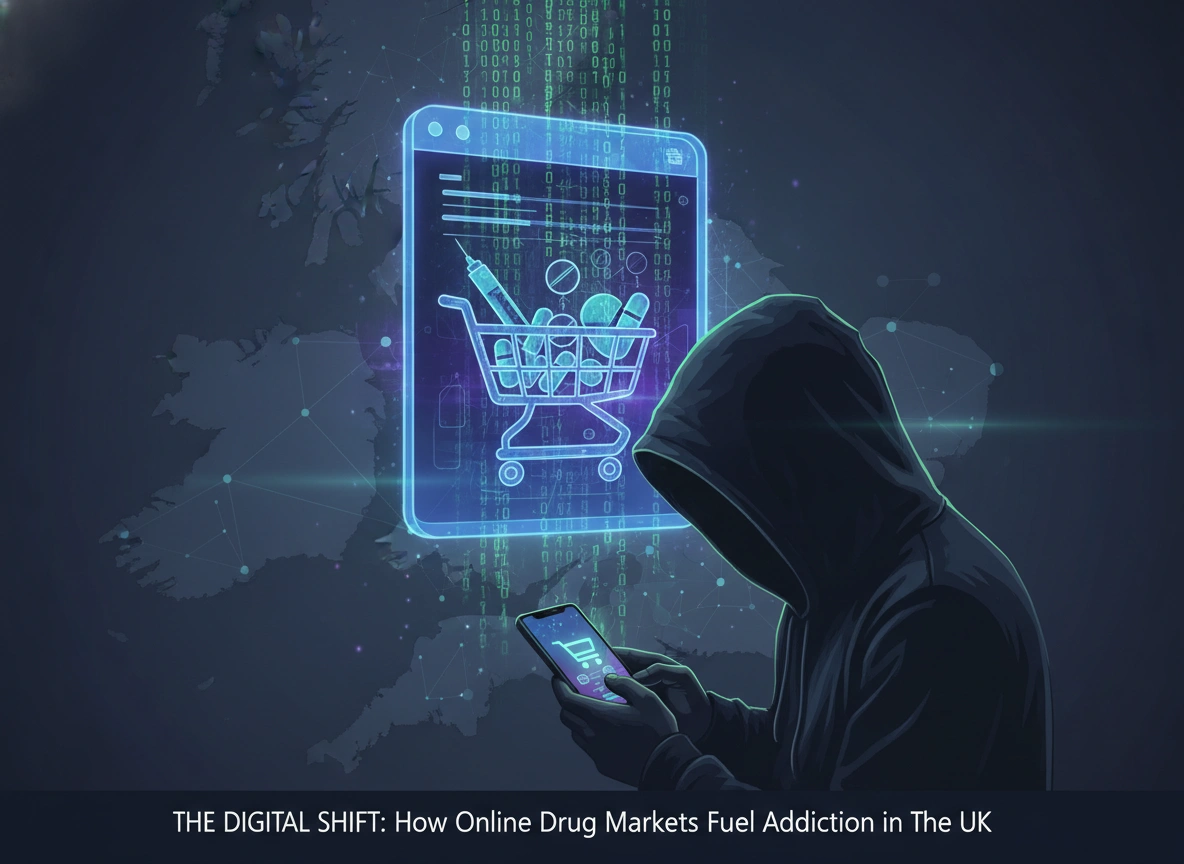
The landscape of drug purchasing in the United Kingdom has undergone a massive transformation over the last decade. Historically, obtaining illicit substances required physical interaction—often in unsafe environments—with local dealers. Today, the process can be as simple as ordering a pizza. The digital shift in drug markets has moved transactions from street corners to smartphones, fundamentally altering how individuals access and interact with illegal substances.
This transition is driven by the rise of encrypted messaging apps, social media platforms, and the dark web, creating a decentralized and highly accessible marketplace. For many, the anonymity and perceived safety of ordering from a screen lower the barrier to entry. Buyers can browse vendor profiles, read customer reviews, and have substances delivered directly to their doorstep via standard postal services.
While this digital evolution presents new challenges for law enforcement, its most profound impact is on public health. The ease of access, combined with the normalization of online purchasing, has significant implications for addiction rates. When the friction of acquiring drugs is removed, the path from casual use to dependency can shorten dramatically. Understanding this digital dimension is crucial for addressing the modern realities of substance abuse in the UK.
The rise of online drug sales: Platforms and accessibility
Contents
- 1 The rise of online drug sales: Platforms and accessibility
- 2 Psychological and social drivers of online drug purchasing
- 3 The link between easy access and the development of addiction
- 4 Impacts on UK public health and addiction statistics
- 5 Challenges for law enforcement and healthcare providers
- 6 The future of digital drug markets and addiction
- 7 Navigating the path to recovery in a connected world
The architecture of online drug sales is diverse, operating across both the open and dark web. While darknet markets like Silk Road initially popularized the concept of online drug trafficking using cryptocurrencies and Tor browsers, the trade has increasingly spilled over into more accessible platforms.
Social media applications, particularly those popular among younger demographics, are frequently used to advertise and facilitate drug sales. Features like disappearing messages and encrypted chats provide a veil of security for both buyers and sellers. Vendors often use specific emojis, hashtags, or coded language to bypass algorithmic moderation, making their services discoverable to those in the know while remaining relatively hidden from authorities.
This accessibility is a critical factor in the expansion of the market. Anyone with a smartphone and an internet connection can potentially connect with a supplier within minutes. The transaction process often mimics legitimate e-commerce, with vendors offering menus, bulk discounts, and even tracking numbers for deliveries. By mirroring the convenience of modern online shopping, these platforms normalize the purchase of illicit substances, distancing the buyer from the traditional risks associated with drug deals.
The decision to purchase drugs online is influenced by a complex interplay of psychological and social factors. One of the primary drivers is the perceived reduction in physical risk. Buy Cocaine Online UK eliminates the need to meet strangers in unfamiliar or dangerous locations. This appeals particularly to individuals who might never consider approaching a street dealer, effectively expanding the consumer base to include a broader demographic.
Anonymity also plays a significant role. The digital screen acts as a buffer, reducing the stigma and social anxiety associated with buying drugs. Buyers feel a sense of detachment from the illicit nature of the act, viewing it as just another online transaction. This psychological distancing can make it easier to justify repeated purchases, as the immediate negative social consequences are minimized.
Furthermore, the review systems common in online drug markets create a false sense of security. Vendors build reputations based on the quality of their product, reliability of stealth packaging, and customer service. Buyers often rely on these reviews to mitigate the risk of receiving adulterated substances. However, this system can cultivate a dangerous trust between buyer and seller, encouraging continued use under the illusion of safety.
The link between easy access and the development of addiction
The correlation between the availability of a substance and the prevalence of its abuse is a well-established principle in addiction science. When drugs are easier to obtain, consumption typically increases, and with it, the likelihood of developing a dependency. The online market amplifies this dynamic by removing traditional barriers to access.
In the past, running out of a substance meant coordinating a new purchase, which could involve delays, logistical challenges, or safety concerns. These hurdles often served as natural interruptions in use. Online purchasing smooths out these friction points. With next-day delivery options and 24/7 vendor availability, individuals can maintain a steady supply with minimal effort. This continuous access facilitates binge usage and daily habits, accelerating the transition from recreational use to addiction.
Moreover, the sheer variety of substances available online exposes users to new and potentially more addictive drugs. A buyer looking for a specific substance might be tempted by a vendor’s broader catalog or promotional offers. This exposure to novel psychoactive substances (NPS) or high-purity drugs increases the risk of unpredictable reactions, overdoses, and the rapid onset of severe addiction.
Impacts on UK public health and addiction statistics
The consequences of this digital shift are increasingly visible in public health data across the UK. Treatment centers and healthcare providers are reporting a rising number of individuals seeking help for dependencies on substances primarily sourced online. This includes not only traditional illicit drugs but also a surge in the misuse of prescription medications, such as benzodiazepines and opioids, which are widely available through illicit online pharmacies and darknet vendors.
The purity and potency of drugs purchased online also contribute to a growing public health crisis. While buyers may seek out highly rated vendors for perceived safety, the reality is that high-purity substances carry a significantly greater risk of fatal overdose. The unregulated nature of the market means that product consistency is never guaranteed, and the inclusion of dangerous adulterants remains a constant threat.
Furthermore, the demographic profile of those seeking treatment is shifting. The perceived safety and convenience of online purchasing attract individuals who do not fit the traditional stereotype of a drug user. This includes professionals, students, and younger individuals who might otherwise be deterred by street-level purchasing. Consequently, addiction services must adapt to treat a more diverse population with varying needs and patterns of use.
Challenges for law enforcement and healthcare providers
The transition of drug sales to digital platforms presents unprecedented challenges for both law enforcement and the healthcare sector. For police and border agencies, the sheer volume of small parcels moving through the postal system makes detection incredibly difficult. Vendors utilize sophisticated stealth packaging techniques to evade scanning and sniffer dogs, meaning that only a fraction of illicit packages are intercepted.
Additionally, the jurisdictional complexities of the internet hinder traditional policing methods. A vendor operating in one country can easily supply a buyer in the UK, complicating investigations and requiring extensive international cooperation. When darknet markets are shut down, new ones rapidly emerge to take their place, creating a perpetual game of whack-a-mole for authorities.
Healthcare providers face their own set of hurdles. The rapid emergence of new synthetic substances online often outpaces toxicological research and the development of specific treatment protocols. Medical professionals may encounter patients experiencing acute toxicity from substances that are not yet widely recognized or understood. This requires ongoing education and the ability to rapidly adapt treatment strategies to address the evolving landscape of online drug use.
The future of digital drug markets and addiction
As technology continues to advance, the methods used to facilitate online drug sales will inevitably evolve. The integration of artificial intelligence, more robust encryption, and decentralized networks could further obscure these markets from law enforcement.
To combat this, a multifaceted approach is necessary. Law enforcement must continue to develop sophisticated digital forensic capabilities and enhance international collaboration. However, supply-side interventions alone are insufficient.
Public health strategies must focus on education and harm reduction, explicitly addressing the risks associated with online purchasing. Campaigns should target the misconception that digital drug transactions are safer or cleaner than street-level purchases. By increasing awareness of the hidden dangers, such as the risk of high-purity overdoses and the presence of adulterants, public health initiatives can help deter potential buyers.
The digital era has undeniably reshaped the landscape of drug access and addiction in the UK. The convenience, anonymity, and vast selection offered by online platforms have lowered the barriers to drug use, facilitating faster trajectories toward dependency for many individuals.
Addressing this modern public health challenge requires recognizing that the internet has fundamentally altered the drug market. Recovery programs and support systems must adapt to this reality, providing resources that acknowledge the unique triggers and accessibility issues associated with digital purchasing. By combining robust public health initiatives, specialized treatment programs, and targeted educational campaigns, society can better support those navigating the complex path of addiction recovery in an increasingly connected world.

Leave a Reply