 Skip to content


Shopping for a watch can feel surprisingly complicated once you move beyond the display case at a brand boutique. The secondary market is full of terms that sound similar but mean very different things. Words like “vintage,” “pre-owned,” and “counterfeit” get tossed around in listings, forums, and auctions, yet each describes a distinct type of watch with its own value, risks, and rules.
Understanding these categories protects your money and helps you buy with confidence. Whether you want a classic piece with history, a like-new luxury model at a fair price, or you simply want to avoid getting scammed, knowing the difference matters. Let’s break down each category, explain what to watch for, and share practical tips for verifying authenticity.
What Is a Vintage Watch?
Contents
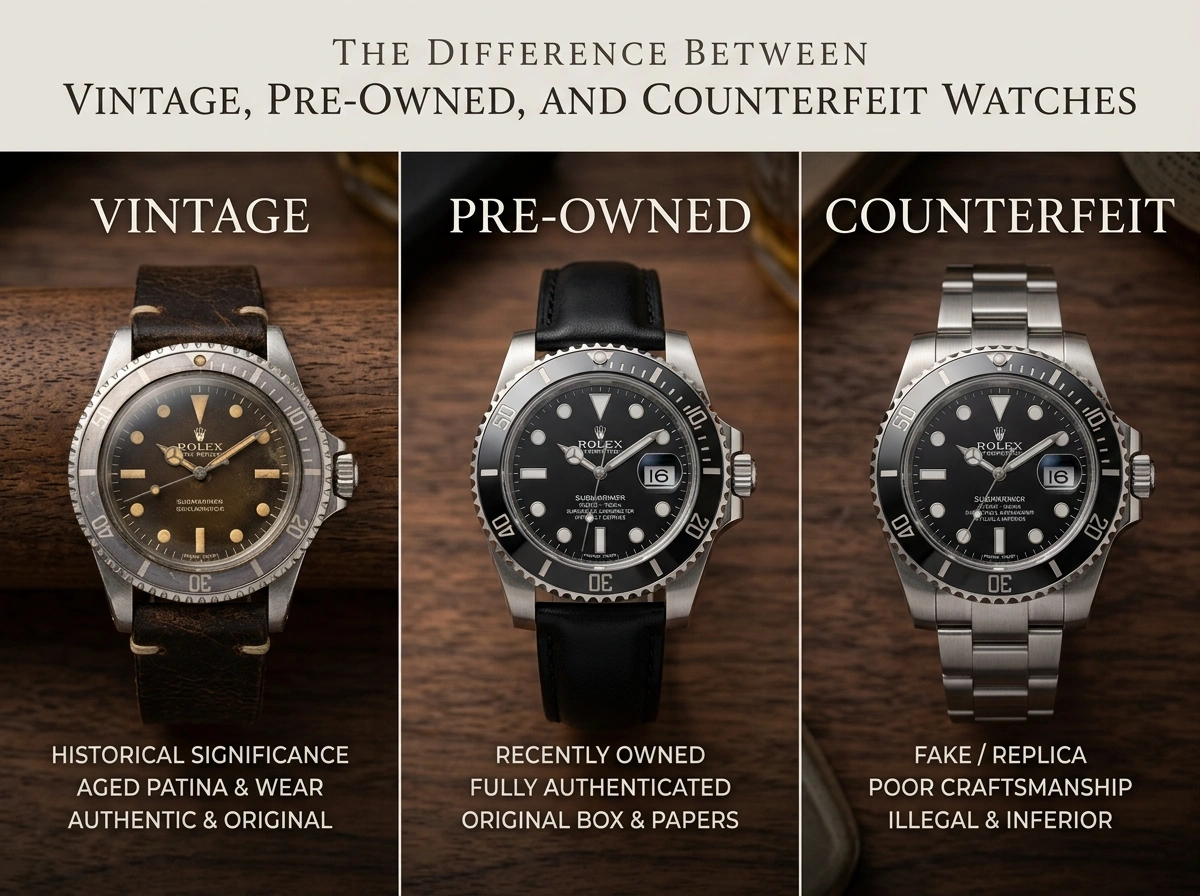
A vintage watch is a genuine timepiece that has reached a certain age, usually 20 to 30 years or older. These watches were produced by the original manufacturer and have survived through the decades. Many collectors prize them for their character, rarity, and connection to a specific era of design.
The appeal of vintage goes beyond telling time. A vintage Rolex, Omega, or Patek Philippe carries the fingerprints of its period: the dial fonts, the lume material, the case shape, and even the small imperfections that come with age. Some collectors actively seek out faded dials or aged patina because these features can’t be faked easily and make each piece unique.
That said, age brings challenges. Original parts may be worn or replaced over the years. A watch with all its factory components, known as being “all original,” typically commands a higher price than one with swapped dials, hands, or movements. Service history also affects value, so detailed records can make a real difference.
Key Points for Vintage Buyers
- Confirm the production year using serial and reference numbers.
- Ask whether parts are original or have been replaced.
- Request service records and any documentation.
- Expect some wear; perfection is rare and sometimes suspicious.
What Is a Pre-Owned Watch?
A pre-owned watch is any authentic watch that has had a previous owner, regardless of age. Unlike vintage pieces, pre-owned watches are often modern models that may be only a few years old. The category is broad. It includes everything from a lightly worn dress watch to a barely used sports model that someone decided to sell.
The pre-owned market has grown rapidly, and for good reason. Buyers can find current or recent models at prices well below retail. Some popular steel sports watches are so in demand that they actually sell for more on the secondary market than at the boutique, but most pre-owned pieces offer genuine savings.
Reputable sellers often inspect, service, and authenticate pre-owned watches before listing them. Many provide warranties and original boxes and papers, sometimes called “full set.” Buying pre-owned from a trusted dealer combines the savings of the secondary market with peace of mind.
Key Points for Pre-Owned Buyers
- Buy from sellers with strong reputations and clear return policies.
- Ask for the original box, papers, and any service receipts.
- Check whether the watch comes with a dealer or factory warranty.
- Inspect condition carefully and request detailed photos.
What Is a Counterfeit Watch?
A counterfeit watch is a fake. It copies the look, branding, and sometimes the model number of a genuine watch without authorization from the brand. Counterfeits range from cheap, obvious imitations to highly detailed reproductions designed to fool even experienced buyers.
Some of the more sophisticated fakes are marketed online using phrases like “replica” or “super clone.” You may even come across listings advertising a rolex super clone for sale that promise close visual similarity to the real thing. These products imitate the design of established luxury brands, but they are not authentic and carry no official backing, warranty, or genuine resale value.
Buying or selling counterfeit goods raises serious concerns. Trademark infringement is illegal in many countries, and customs authorities regularly seize fake watches. Beyond the legal risks, counterfeits use lower-quality materials and movements, so they rarely hold up over time. They also have essentially no investment value, since collectors and dealers will not pay for an inauthentic piece.
The most important thing to remember is simple: a counterfeit watch is never the same as a genuine one, no matter how convincing it looks in photos. If a deal seems far too good to be true for a luxury brand, the watch is almost certainly fake.
Warning Signs of a Counterfeit
- Prices dramatically below market value for the brand.
- Sellers who avoid showing serial numbers or documentation.
- Sloppy printing, misaligned text, or incorrect logos on the dial.
- Lightweight feel or cheap-sounding click on the bezel.
- Movements that don’t match the brand’s known calibers.
Comparing the Three Categories
It helps to see how these categories line up side by side. Vintage and pre-owned watches are both authentic; the main difference is age and, often, condition. A vintage watch is celebrated for its history, while a pre-owned watch is valued for offering a genuine modern timepiece at a better price. Counterfeit watches stand apart entirely because they are not real products of the brands they imitate.
Value follows the same pattern. Authentic vintage and pre-owned watches can appreciate or hold their worth, especially sought-after references. Counterfeits lose value the moment you buy them and cannot be resold legitimately.
How to Authenticate a Watch
Authentication is the single best way to protect yourself in the secondary market. Here are practical steps that apply to both vintage and pre-owned purchases.
Check the serial and reference numbers. Genuine watches carry engraved numbers that match brand records and documentation. Verify these against the paperwork and, when possible, with the manufacturer.
Examine the movement. Open the case back if you can, or ask the seller for clear photos. The movement should match the caliber the brand used for that model and year. Counterfeits often hide cheaper movements inside.
Weigh the details. Authentic luxury watches use quality materials and feel substantial. Check the alignment of text, the smoothness of the bezel, and the crispness of engravings.
Request documentation. Original boxes, warranty cards, and service records support authenticity. While documents alone don’t guarantee a genuine watch, their absence should prompt extra caution.
Use a professional. When buying high-value pieces, have an independent watchmaker or authentication service inspect the watch. Many reputable dealers welcome this step.
Practical Buying Considerations
Before you commit, set a clear budget and decide which category fits your goals. If you love history and don’t mind some wear, vintage may be perfect. If you want a current model at a discount with reliable performance, pre-owned is likely the better route.
Always buy from sellers who stand behind their watches. Read reviews, ask questions, and confirm return policies. A trustworthy seller will answer detailed questions and provide plenty of photos without hesitation. Avoid pressure tactics and deals that demand quick payment through untraceable methods.
Finally, keep your own records. Once you own a genuine watch, store its documents safely and service it on schedule. Good records protect your investment and make any future sale smoother.
Conclusion
The difference between vintage, pre-owned, and counterfeit watches comes down to authenticity and age. Vintage watches are genuine pieces with history. Pre-owned watches are authentic, often modern timepieces offered at a better price. Counterfeit watches are fakes that carry legal risks, poor quality, and no real value.
By learning to recognize each category and following solid authentication practices, you can shop the secondary market wisely. Take your time, ask the right questions, and lean on trusted experts when needed. The reward is a watch you can wear with pride and confidence, knowing exactly what you bought and why it matters.

Leave a Reply